

Online casino disputes usually blow up because of process mistakes, not weak claims. In Greece, the Hellenic Gaming Commission strengthens consumer protection every year, yet plenty of strong cases fall apart before anyone reviews them. Recognizing what ruins a complaint is the difference between receiving compensation and walking away empty-handed. Licensed operators like Slotoro Casino build their dispute systems specifically to stop those failures, but even a ironclad claim falls apart if a player makes the wrong move.
Misunderstanding the Platform’s Actual Licensing Jurisdiction
The primary big mistake is guessing that any casino showing a Greek-language interface must be licensed by the Hellenic Gaming Commission. Many sites function under a Curacao, Malta, or Kahnawake licence, and that determines which mediation body ends up handling the dispute. Filing a complaint with the wrong regulator wastes weeks of processing, and the case gets thrown out without anyone reviewing the facts.
Before you put in a single euro, navigate to the bottom of the page and verify the licence stamp. A trustworthy operator like Slotoro Casino displays its registration number front and centre, tied to the live licence register. That one check removes a huge pile of dead-end complaints that occur simply because nobody took the time to verify which authority actually calls the shots.
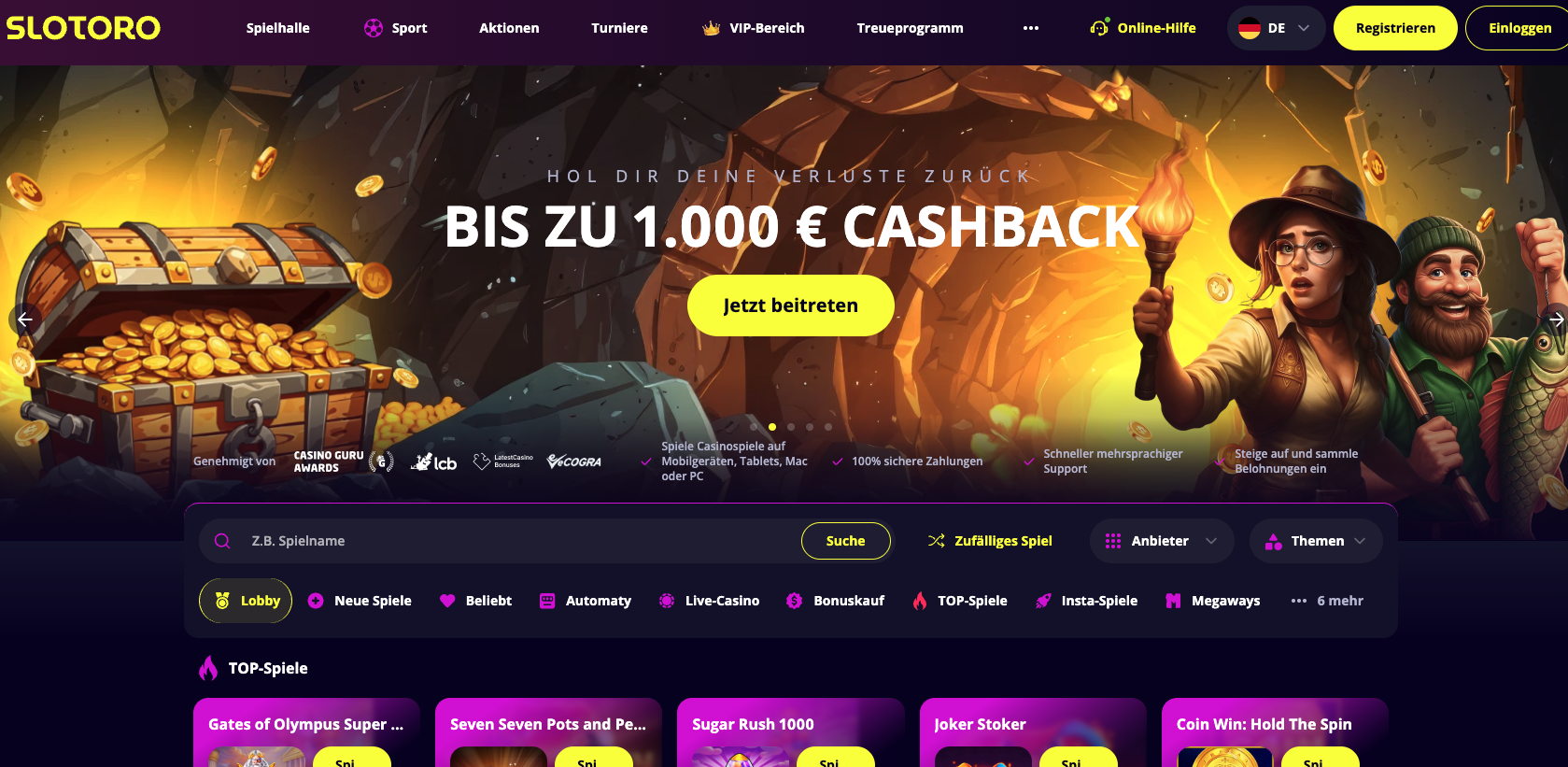
Greek residents receive extra protection at EEEP-licensed domains because EU ADR rules require those operators into binding alternative dispute resolution. For offshore-licensed platforms, the route is narrower, depending on eCOGRA or independent arbitration. Pinpointing the jurisdiction early saves you from following a complaint into a bureaucratic black hole.
Escalating Prior to Finishing Internal Procedures
Jumping to a public forum, a chargeback, or the regulator without having followed the operator’s internal complaints process is a strategic blunder. Most regulatory authorities — including the Hellenic Gaming Commission — will not consider a case unless you can prove you have completed the casino’s internal procedure. Blasting the story on social media, however justified it may be, sets the process back to square one.
The correct sequence commences with frontline support, before advancing to a documented written appeal sent to the specific compliance email address. Slotoro Casino states that contact in the responsible gaming section; replies come with a reference number that regulators acknowledge. Should no response arrive within the official waiting period — typically five to ten working days — you are permitted to proceed further.
Omitting those procedures holds up the entire process and can tank your leverage. The moment you file a chargeback, the operator’s terms often permit them to lock the profile and void pending withdrawals. Though trying to bypass the process, you inadvertently activate the platform’s hardest defence.
Misusing Chargeback Rights Pursuant to Greek and European Law
Making a chargeback via a Greek bank or card issuer is akin to drawing a bazooka, but in gambling disputes it is often pointed the wrong way. Card networks describe a chargeback as a solution for fraud or service not rendered — not for quarreling over bonus fine print or game fairness. If you code a genuine gameplay disagreement as fraud, the merchant can hit back with transaction logs and reverse the reversal, resulting in you being broke and with a marked banking record.
The only safe window for a chargeback is when the casino pulls money without permission or refuses to return a deposit after a clear breach of its licence conditions. Everything else, go through ADR first. A premature chargeback nearly always blocks the account and removes any chance of a friendly settlement.
Greek banks now eyeball gambling chargebacks more rigorously than ever, partly because of anti-money laundering rules. A declined chargeback and then a locked bank account places you in a double mess. Licensed platforms like Slotoro Casino present a dispute form that doubles as a contractual record — way more effective at getting money back than a knee-jerk chargeback.
In what manner a Systematic Affiliate Programme Stops Recurring Disputes
The relationship between an affiliate programme and halting disputes is not flashy, but every responsible operator gets it. When a casino allows rogue affiliates run wild, support spends its hours tackling fires set by strangers. A strictly run programme serves as the first line of legal defence.
Slotoro Casino’s legal and affiliates page spells out the compulsory compliance rules for every partner. Creatives must have pre-approval, bonus descriptions have to match the current terms, and responsible gambling info must sit on every landing page. Automated link audits plus human review enforce those rules, creating a marketing ecosystem where players encounter consistent, truthful info.
When a dispute arises, the player’s entry path is traced back to the referring affiliate. If compliance sees you came through an approved, monitored channel, the investigation commences from a trust baseline. That often expedites because the operator knows the offer was shown clearly, cutting out the ‘he said, she said’ phase that drags so many cases.
Communicating with Support in a Hostile or Vague Manner
The initial support ticket’s tone usually establishes the tone for the whole investigation. Agents who are subjected to verbal attacks or disjointed accusations adhere to the rulebook, while a collected, detailed message generates some favorable goodwill. In Greece, where many players don’t use English natively, the additional translation layer can make emotional phrasing sound downright hostile.
A strong complaint begins with one factual statement: the date, time, and amount in dispute. Then enclose the evidence package and point to the exact term or game rule. Eliminate adjectives, assumptions about intentions — just a clear timeline. That’s exactly how regulators format their own case reviews.
Slotoro Casino trains support to differentiate tone from content, but standards across the industry show that professionalism shortens resolution time. A dispute you could wrapped up in three messages turns into a week-long deadlock because your wording made compliance stand firm.
Neglecting the Role of the Regulatory Authority and ADR
Many Greek players are unaware that EEEP-licensed casinos are required to sign up with an approved Alternative Dispute Resolution body. This outfit works as a no-cost, impartial arbitrator authorised to hand down binding decisions. The big misstep comes from hiring a lawyer before you even present the case to the ADR provider — you squander legal fees pursuing a result the regulator might serve up in weeks.
Identifying the right ADR is simple. The casino’s licence footer or complaint policy names the assigned provider — perhaps the Malta Gaming Authority’s player support unit or an independent mediation centre. The European Commission’s Online Dispute Resolution platform accepts cross-border gambling gripes also, offering you a single digital front door that directs the case to the correct body.
Slotoro Casino details its ADR provider in the legal section, with a direct link and a checklist of what to attach. Filing through that channel sets a formal response deadline. But complaints that come without evidence you followed internal channels bounce straight back, which just underscores why the sequence matters.
Ignoring the Effect of the Affiliate Marketing Chain
A surprising chunk of disputes don’t start with anything the casino did — they emerge from fake promises concocted by unvetted affiliate sites. Players who click banners shouting ‘guaranteed wins’ or ‘secret loopholes’ show up hoping for things no honest operator can provide. When reality kicks in, the casino bears the fury even though the affiliate planted the lie.
Slotoro Casino has dedicated resources into a compliance-monitored affiliate programme that reviews partner content every quarter. Approved affiliates can’t push terms that clash the casino’s official rules. Any site caught inventing bonus values or RTP guarantees gets yanked from the network. That screening slashes the number of expectation-driven disputes.
The player-side defence is dead simple: never believe an offer that doesn’t show on the official promos page. If an affiliate boasts a 400% bonus with zero wagering and the casino’s actual terms list a 100% match with 35x playthrough, you’re stepping straight into a fight. Capturing screenshots of affiliate landing pages before you sign up offers another shield in case a dispute escalates later.
Omitting to Read and Log the Explicit Terms and Conditions
Nearly every payout conflict that gets turned down goes back to some provision the player overlooked at sign-up. Bonus rules, payout limits, limited payment methods, idle account fees — they’re all sitting in the Terms and Conditions. Overlook them, ask for an exemption later, and support agents are bound enforcing the stated rules.
The wise move: save a time-stamped PDF of the complete terms page the day you establish your account. αποκτήστε περισσότερες λεπτομέρειες version-controls its terms and won’t apply backward changes without a recorded notice. Nevertheless, owning your own copy neutralizes the ‘you changed the rules’ line that support desks brush off without a further consideration.
Focus on bonus-related fine print. Wagering value percentages, max bet caps while a bonus is live, and geographic exclusions for specific games light the foundation on most disputes. Document those details methodically before you spin, and later you’re just referencing a paragraph instead of trusting in a hazy memory.
Failing to Maintain a Single Point of Contact
Firing off multiple tickets, contacting from different addresses, and reaching out under separate accounts disrupts the internal tracking system. You find yourself with a splintered case file where no single agent has the whole story. Consolidating duplicate tickets chews up time and often spits out contradictory answers that the player reads as bad faith.
The disciplined way: one email thread for the whole complaint lifecycle. Every follow-up continues the original case number thread, maintaining the timeline. If the platform has a structured complaint form, make that the master record. Slotoro Casino’s compliance system pins every case to a unique ID that remains even if you later reach a different department.
When a regulator finally reviews the file, a jumble of fragments hurts your case. A clean, straight thread with attachments and dated replies looks like a credible, tight complaint. That alone can sway the regulator’s first impression before the real arguments even get evaluated.
Not Collecting Thorough Evidence While recording Gameplay
Casino servers track every spin, hand, and transaction, but those logs aren’t always in your way. Lacking your own proof, a dispute transforms into a unilateral account. Support teams sift through hundreds of claims monthly and only jump on the ones with ironclad proof. Screenshots, screen recordings, and transaction IDs enhance a complaint’s credibility overnight.
A robust evidence package provides zero wiggle room. Grab these items before you close the session — some platforms delete history the moment you log out.
- An entire screen capture with the game round ID, bet amount, result, and the system clock in frame.
- A screen capture video of the disputed round that captures the loading sequence and any error messages.
- The cashier transaction ID, timestamp, and amount for every deposit and withdrawal tied to the dispute.
- Copies of all live chat transcripts or email threads, exported as PDF files.
- A screenshot of your bank statement showing the outgoing or missing payment at the payment provider level.
Slotoro Casino’s dispute team says cases that arrive with this five-point kit get resolved three times faster than the ones that arrive with vague complaints. When you can specify to exactly what went wrong, compliance locates the technical logs in minutes. No evidence, and you’re left waiting through a lengthy internal audit that usually concludes without a win.
Downplaying the Value of a Formal Complaint Letter
Telephone calls and disjointed chat messages rarely leave a reliable dispute trail. A official complaint, laid out like a business letter, has weight — it indicates you’re recording everything for eventual escalation. It also requires you to specify clearly what remedy you’re after, which sharpens the negotiation right away.
The letter needs your complete legal name, account username, the time and specifics of what happened, a bullet list of attached evidence, and a particular ask — like a reimbursement of a set amount or the restoration of a bonus locked by mistake. Dispatching it via certified email or the platform’s secure upload portal establishes an impenetrable chain of custody.
Slotoro Casino’s legal team handles formal complaint letters during the ADR-mandated window and frequently sorts things out before any outside mediation begins. Players who skip this step and base everything on chat transcripts discover too late that many operators don’t permanently log live chat — destroying the simplest proof they possessed.
Conclusion
Casino disputes rarely get settled by screaming or taking shortcuts. The players who collect their money quickest are the ones who verify the licence at the door, document every term, compile granular evidence, and follow the internal and regulatory ladders in order. Greek players inside the EEEP framework have a notably strong net when they stick to the script — support desk to ADR — without adding unnecessary chaos. Slotoro Casino has woven that discipline into both its player-facing operations and its monitored affiliate programme, eliminating friction from the jump. The lesson is definite: manage a dispute like a contract negotiation, not a screaming match, and the outcome almost always shifts in your favour.